

English

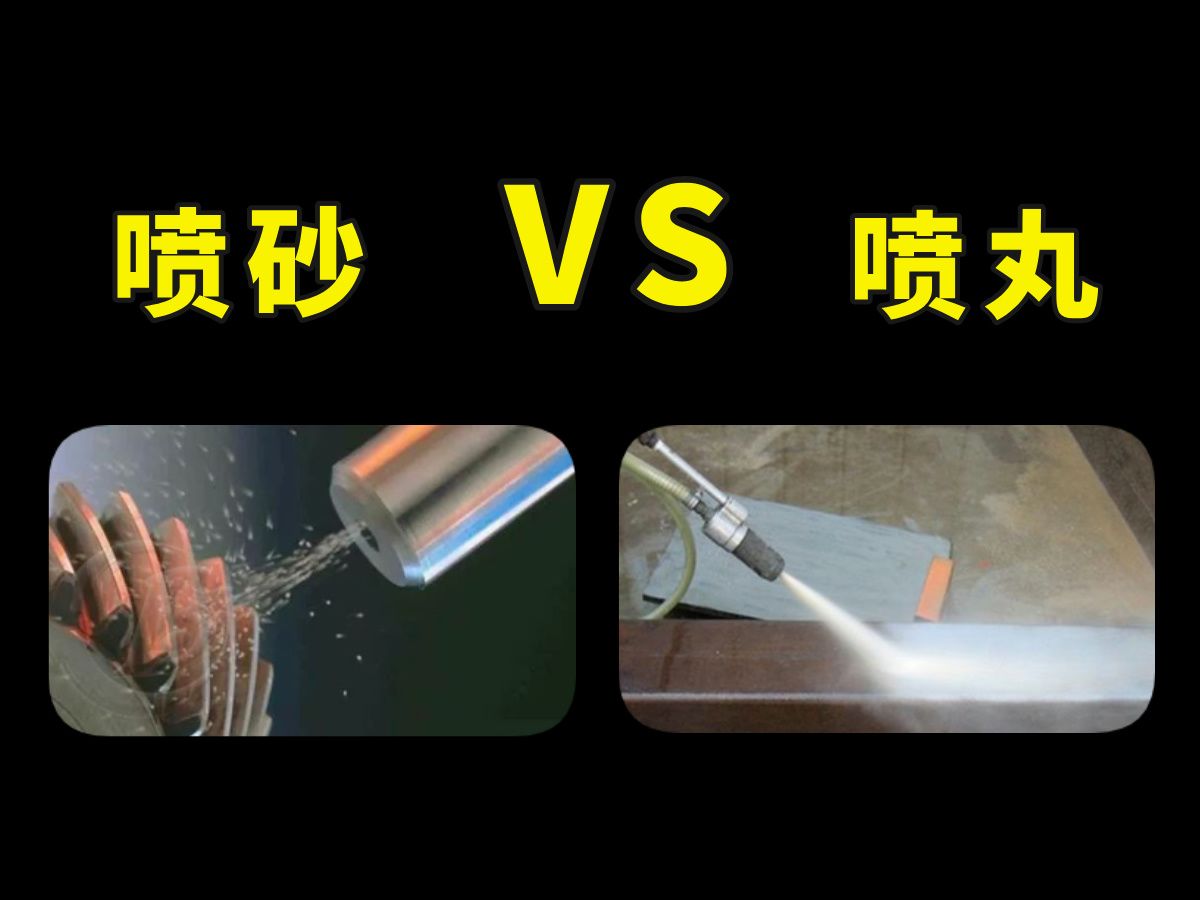
Shot Blasting (Sand Blasting) Treatment
2026-11-03
Shot blasting (sand blasting) is a common surface treatment process prior to hot-dip galvanizing. It uses compressed air to propel shot or sand media to strike workpieces and remove contaminants such as welding slag, paint and rust. It is especially s…
More Details
Pickling
2026-10-26
## I. Purpose of Pickling and Rust Removal MechanismSteel workpieces have scale and rust such as FeO, Fe₂O₃ and Fe₃O₄ on their surfaces, which must be removed prior to hot-dip galvanizing. Otherwise, the fluxing effect will be reduced and skip pla…
More Details
Old Paint Removal
2026-10-19
I. Purpose of the ProcessWhen the old paint film on workpieces suffers from coating defects, transportation damage or aging damage and re-hot-dip galvanizing is required, the old paint film must be removed. Old paint removal methods fall into three ca…
More Details
Degreasing
2026-10-12
I. Functions and Impacts of DegreasingDegreasing is a basic pre-treatment process for hot-dip galvanizing. Oil contaminants on workpiece surfaces originate from mineral oils, animal and vegetable fats used during processing, storage and transportation…
More Details
Corrosion of Steel Materials
2026-10-08
## I. Essential Process of Metal Corrosion1. Definition: A process in which metals undergo phase transformation, form new substances and suffer damage under the action of media.2. Thermodynamic Driving Force: Energy input is required for metal smeltin…
More Details
Hanging Workpieces
2026-09-28
I. OverviewWorkpieces for batch hot‑dip galvanizing are of various types, and racking is the primary process in batch galvanizing. Early practices adopted hoisting whole bundles for secondary racking, which suffered from low efficiency. Modern factor…
More Details
Process Classification and Procedures
2026-09-21
I. Development History1. In 1742, Melouin pioneered the protective method of immersing iron in molten zinc;2. In 1836, Sorel obtained the hot‑dip galvanizing patent, specifying pickling and ammonium chloride fluxing processes;3. In 1836, similar pate…
More Details
High‑temperature Hot‑dip Galvanizing
2026-09-14
High‑temperature hot‑dip galvanizing is a technical solution to address galvanizing defects of high‑silicon reactive steel (wSi≈0.3%).1. PrincipleWhen the zinc bath temperature exceeds 530 C, the ζ phase disappears. Liquid zinc is in equilibrium…
More Details
Influence of Surface State of Silicon‑containing Steel on Hot‑dip Galvanized Coating
2026-09-07
For silicon‑containing steel, at the Sandelin peak ($w_{Si}≈0.1\%$) and $w_{Si}>0.3\%$, local explosive growth tends to occur, forming coarse ζ‑phase, which deteriorates coating appearance, degrades mechanical properties and increases zinc consum…
More Details
Effects of Silicon‑containing Reactive Steel on Hot‑dip Galvanizing
2026-08-31
1. Background and Sandelin EffectSilicon is used as a deoxidizer in continuous steel casting to produce silicon‑containing reactive steel. Silicon in steel significantly accelerates the iron‑zinc reaction, which is known as the Sandelin effect. Two …
More Details
Influence of Chemical Composition of Zinc Bath on Iron-zinc Reaction
2026-08-17
In hot-dip galvanizing, the zinc bath contains various elements apart from the zinc matrix. These elements originate from three sources: dissolution from workpieces or self-generation in the zinc kettle, intentional additions, and inherent constituent…
More Details
Influence of Chemical Composition of Steel on Iron-zinc Reactions
2026-08-10
## I. Basic BackgroundHot-dip galvanized structural steel contains silicon, manganese, sulfur, phosphorus, oxygen, nitrogen, hydrogen and various intentionally added alloying elements in addition to carbon. Silicon and manganese are essential deoxidiz…
More Details
Hot-dip Galvanizing Reactions
2026-08-03
## I. Iron-zinc Phase Diagram and Various Intermetallic Compound PhasesFundamental Function of the Iron-Zinc Phase Diagram: Hot-dip galvanizing is essentially a process of mutual reaction and diffusion between iron and zinc, and the evolution of coati…
More Details
Structure and Properties of Zinc
2026-07-27
## I. Microscopic Structures of Zinc (Three Hierarchical Structures)### 1. Atomic Structure(1) Basic parameters: Zinc is an element in Group IIB zinc subgroup of the 4th Period with an atomic number of 30 and a relative atomic mass of 65.38. Its valen…
More Details
Process Performance Characteristics and Applications of Zinc Coatings
2026-07-20
## I. Two Major Categories of Hot-dip Galvanizing ProcessesPrinciple of Hot-Dip Galvanizing: Pretreated steel workpieces (cleaned and activated) are immersed in molten zinc liquid. Iron-zinc alloy coatings form via iron-zinc diffusion reactions. The p…
More Details
Corrosion Resistance of Zinc Coatings
2026-07-13
## I. Electrochemical Corrosion Principle of Zinc Coatings1. Microscopic Corrosion Cause: Defects exist in the purity and uniformity of zinc coatings, forming countless micro galvanic cells in corrosive media and triggering localized electrochemical c…
More Details
Protective Coatings for Steel Materials
2026-07-06
## I. Hot-dip Coatings1. Process Principle: Immerse steel workpieces in molten metals (zinc, aluminum, tin, lead, etc.) whose melting points are far lower than that of steel. Dissolution, diffusion and chemical reactions occur between the substrate an…
More Details
The Importance Of Protection For Steel Materials
2026-06-22
1. Steel has a wide range of applications yet is prone to corrosion in various media. Massive quantities of steel worldwide are lost to corrosion every year. Protective coatings can not only extend the service life of components but also endow materia…
More Details
Galvanizing Process Flow
2026-06-17
Pre-treatmentIncoming Inspection → Degreasing → Washing → Pickling → Washing → Fluxing → DryingCore GalvanizingHot-dip Galvanizing → CoolingPost-treatmentWashing → Chromate-free Passivation → Inspection & Repair → Packing → Delivery
More Details